Useful Information
This section brings together useful information about local services and issues.
We’ve compiled this information from official sources and community knowledge, but please check directly with the relevant authorities for the most up-to-date details, especially for opening hours, timetables & schedules, and regulations that may change.
Spotted something missing or out of date? Please let us know so we can keep this information current and helpful for everyone.
Cidadão Óbidos App

Óbidos Municipal Council has an easy-to-use app that allows residents to report incidents, including georeferencing and photographs, on a range of topics, including faults with public lighting, pests and infestations (including Asian hornets), collection of animal carcasses, forest clearance, road cleaning, pavement deterioration, lack of road markings and signs, risk of fire, landslide & infrastructure collapse.
The Óbidos Municipal Council services will analyse your submission and take the necessary steps to resolve the matter satisfactorily. They may request further information from you if necessary.
It is available for both iOS and Android, depending on your AppleID and location settings.
Click here for more information: Cidadão Óbidos App
Environmental and Health & Safety Issues
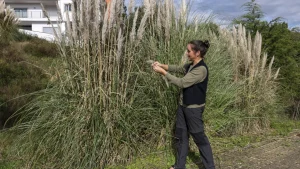
Pampas
Despite its beauty, Pampas is an invasive species that causes serious problems for health, biodiversity, and the economy, and it has spread very rapidly in our area. It replaces native vegetation and is expensive and difficult to control once established.
Each plume can release thousands of seeds, easily carried by the wind. In addition to rapid dispersal, the species aggravates allergies and respiratory problems; forms dense clumps that eliminate native species; and generates high removal costs for municipalities, businesses, and property owners. Early control and prevention are the most effective strategies to prevent the spread. To help, you can:
- report it to the Invasoras project through the Biodiversity4all app;
- remove feathers before seed dispersal – until the end of September; and,
- uproot young plants, preventing their establishment.
Processionary caterpillars
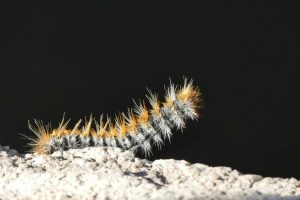
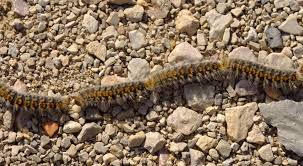
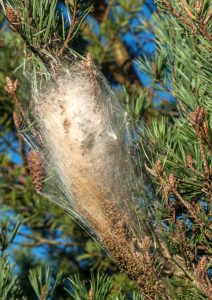
Processionary caterpillars (Thaumetopoea pityocampa) are found in pine trees and descend in long, nose-to-tail lines to find a place to pupate. Their tiny, toxic hairs can cause severe allergic reactions, not only in animals but also in humans. They are most active in late winter and early spring, although in the last couple of years they have also been active in late summer and early autumn.
What to look out for:
- Caterpillars on the ground– typically seen moving in long processions, often in sandy or grassy areas near pine trees.
- Cocoons in pine trees– white, cotton-like nests high up in pine trees are a sign of infestation.
Precautions:
- Do not touch or handle the caterpillars.
- Avoid walking dogs in pine forests or near infected trees during peak seasons.
- Keep pets on a lead to prevent them from sniffing or playing with caterpillars.
- If you or your pet come into contact, seek medical attention or veterinary care immediately.
What to do if your pet is exposed:
If your pet has come into contact with the caterpillars, you may notice excessive drooling, swelling of the tongue, pawing at the mouth, difficulty breathing, or vomiting. In severe cases, necrosis of the tongue can occur, leading to life-threatening complications.
- Act fast – contact your vet immediately. Time is critical.
- Avoid touching – do not attempt to remove the caterpillar or its hairs with bare hands, as they can cause skin irritation.
- Flush the area – if possible, rinse your pet’s mouth and affected areas with water to help remove any hairs.
- Monitor symptoms – keep a close eye on your pet and follow the vet’s instructions carefully.

Asian hornets
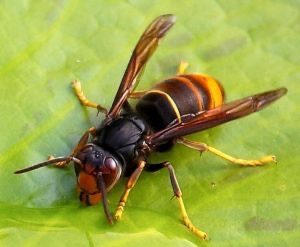
The Asian hornet (Vespa velutina) is an invasive species which preys on honeybees, and is now widespread across mainland Portugal. It poses threats to both biodiversity and public health. Like other wasps, the life cycle is annual and begins in spring (February/March), when the young queen wakes up from hibernation. She searches for food based on the sugars she feeds on, seeking shelter in a hollow tree or in a building where she will begin laying eggs, thus founding the colony.
Identification: Asian hornets are smaller than native hornets, with a predominantly black/dark brown body, a yellow abdominal stripe, and yellow-tipped legs.
Key information on Asian hornet stings:
When they sting: they are most active during summer, particularly August and September. They are highly defensive of their nests, which are often found in trees, on roofs, or sometimes low to the ground.
Danger level: stings are similar in toxicity to native species but cause more pain, lasting swelling, and itching. They are not generally “killer” insects, but they are dangerous to allergic individuals and animals.
Symptoms of reaction: watch for severe swelling, difficulty breathing, dizziness, faintness, or hives, which indicate a potential anaphylactic shock.
What to do if you or your pet is stung:
- Wash the area with soap and water to prevent infection.
- Apply ice or a cold compress to reduce pain and inflammation.
- Use antihistamine creams or take pain relievers, if needed.
When to seek help: Seek immediate medical attention if you experience severe symptoms, or if you receive multiple stings, even if you are not known to be allergic.
What you can do
- Check for nests: large, pear-shaped nests, often high in trees, but also in sheds, hedges, or under eaves.
- Trim vegetation: prune hedges and trees to reduce potential nesting spots.
- Manage waste: keep all bins tightly sealed and ensure garbage bags are tied to prevent leaks that attract hornets.
- Clear food sources: clean up fallen fruit in your garden and promptly remove pet food bowls.
- Remove water sources: eliminate stagnant water sources, such as uncovered water tanks, that may attract them, especially near swimming pools.
- Target queen hornets: in spring (between February and May) set up selective monitoring traps (that allow smaller insects to escape (5mm holes) to protect native species) to catch queen hornets before they start a nest. A common effective mixture for spring trapping is 1/3 beer, 1/3 wine (to deter bees), and 1/3 red fruit syrup/jam.
- Report a nest or sighting as soon as possible: if you find a nest, do not attempt to destroy it yourself, as disturbing it can cause mass attacks. If you have access to the Cidadão Óbidos App, you can report it directly. Also you have the STOPvespa platform (Vespa Velutina – Cidadão Registe aqui o avistamento de um ninho ou vespa asiática – Responder – Open in browser – fill out the form. Or you can contact a private professional pest control service.

Dogs
There are a lot of dogs in Pérola da Lagoa, belonging both to residents and visitors, as well as some who just come on their own ! For the safety, well-being and convenience of all residents and their pets, it is important that:
- Measures are taken that ensure dogs are secure whilst on private property and cannot escape or roam free.
- Dogs are kept under control in public places, which generally means on a lead, in areas such as pavements, roads, and near traffic.
- Owners pick up after their dogs immediately if they foul in any public area, including pavements, gutters, verges and residential green spaces. Being unaware that the dog has fouled, or not having a bag, is not a valid excuse !
- Bagged waste is disposed of in designated dog waste bins, or, if none are available, general public litter bins. Bags of dog waste should not be left on the ground or in trees or hedges.
- Dogs do not cause a nuisance to neighbours, including excessive noise or aggressive behaviour.
- If you see a dog roaming around on its own or your own dog ‘escapes’, you post on the WhatsApp group (with a photo, if possible), so that a quick resolution can be found and the dog can be returned to its owner asap.

Fire
Fires in Portugal are extremely likely due to dry conditions, excessive heat, dry lightning, strong wind gusts, and arson. Every year, the Portuguese government issues a period for cleaning trees and shrubs, agricultural and forested areas to remove ‘fuel for fires’, as part of a wider fire prevention effort. The deadline is usually the end of April / mid-May. This applies to individual homeowners, as well as larger landowners.
The Fogos.pt website or app are an excellent way to stay informed of local fires and their status.
More information can be found at Rural Fire Prevention and Protection | Safe Communities Portugal
Transport

OBI Summer Bus Route

 Stops at key locations such as Óbidos town, Praia d’el Rey, Bom Sucesso, Royal Óbidos and Praia do Rei Cortiço
 Free of charge

FlixBus to Lisbon Airport
FlixBus run a bus direct from Caldas da Rainha Bus Station to Lisbon Airport.
Check the FlixBus website for the full schedule: FlixBus

Rede Expressos bus to Lisbon Airport
Rede Expressos now run a limited number of buses direct from Caldas da Rainha Bus Station to Lisbon Airpot.
Check the Rede Expressos website for the full schedule: Rede Expressos
Recycling & Rubbish !
Waste in our area is managed by a number of different contractors, but the general rules and guidelines are common across all of them to ensure safe and environmentally favourable disposal of everything we throw away.
(Some images are for illustrative purposes only.)

Rubbish Bins (may vary in shape and colour depending on your location).
‘Undifferentiated Waste’ is all urban waste that cannot be separated for recycling or reused.
- Place rubbish in the bin, inside a tightly closed plastic bag, to prevent dirt from getting on the equipment, spills on public roads and the spread of bad smells.
- Always close the container lid.
- Do not put rubbish on the floor. Whenever the bin is full, you should go to the nearest one.
- Never place anything that is recyclable in the container: paper/cardboard; packaging; glass; bulky items; electrical and electronic equipment; batteries and accumulators; rubble and other construction waste; green waste, as well as other waste such as embers and ashes, paints and solvents or dead animals, amongst others.
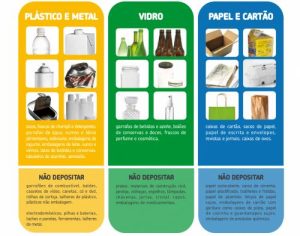
Recycling Bins (may vary in shape and type depending on your location).
Each bin is clearly marked with the type of waste that should (and should not !) be put in each.
Recycled waste should be loose and unbagged.
Cardboard boxes should be dismantled and broken into smaller pieces. They, or larger boxes, should not be left by the bins. If you have a large quantity of cardboard boxes to dispose of, please see below for the disposal of bulky goods.

Recycling Large Electrical Goods
If you have old electrical goods (fridge, washing machine, toaster etc) that no longer work, you can take them to the Bombeiros de Óbidos.
The fire station is part of the Quartel Electrão campaign, which rewards volunteer firefighter associations nationwide for collecting used batteries, light bulbs, and electrical equipment. Dropping your items here helps the fire station while protecting the environment.
@electraopt ensures that all equipment is recycled correctly.

Recycling Small Electrical Items, Batteries & Lightbulbs
You can also take any unwanted small electrical and electronic equipment, batteries and lamps to the Junta de Freguesia do Vau.


Collection and Disposal of Bulky Items, Construction or Garden Rubbish
Collection – option 1
If you have large items (household items, mattresses, electrical appliances, furniture, etc.), construction or garden waste that you want to have collected from your home, there’s a service provided by SMAS Caldas da Rainha and it’s just a phone call away !
This service is free of charge for up to 5 items per month per customer and a maximum quantity of 1m3 of construction and garden waste. (Above these quantities, it will be subject to assessment and the cost will have to be quoted by the services.)
Waste must be properly packaged (in boxes, bags or Big Bags (Example)) to facilitate collection by the services.
Collection can be requested in writing (by email), by telephone or in person:
Telephone: 262 240 002
Email: piquete.contentor@smas-caldas-rainha.pt or tecnica@smas-caldas-rainha.pt
In-person: Câmara Municipal das Caldas da Rainha, Praça 25 de Abril 110, 2500-110 Caldas da Rainha (Ground floor of the Town Hall)
Schedule: Weekdays between 9 a.m. and 4 p.m.
Collection – option 2
You can buy and use Big Bags (maximum weight 1,000kg). The CTT office in Vau has them at certain times, but they are more reliably available at DIY shops (for example, Fernando J Gomes in Amoreira). Price range according to size @ 6€ – 10€.
These bags are heavy once full and the Junta picks them up with a truck that has a small crane on it, so the bags need to be placed on flat ground near (but not on) the road (nor must they block pavements) so that the truck can get to them and lift them. The Junta will not move them from the rear of your property, so fill them in the collection spot.
Once the bag is ready for collection, you need to go to the CTT office in Vau and register a bulk rubbish pickup, which will cost you €15 per bag to be picked up. The CTT gives you a receipt and a collection date.
The driver comes (he may or may not tell you he is there) and removes the bags. Just like that !
Disposal
It is possible to dispose of waste at:
Estação de Transferência e Ecocentro de Óbidos (Valorsul), EM585 60, Gaeiras
Just turn up or send an email to ambiente@cm-obidos.pt, providing your registration number and the day of delivery.
Schedule: Weekdays between 8 a.m. & 12.30 p.m. and 2 p.m. & 9 p.m. and Saturdays between 8 a.m. & 12.30 p.m. & 2 p.m. & 9 p.m.

STARTING 10 April 2026 – local details and facilities to be confirmed
PET Bottle and Can Deposit and Return System
Each PET bottle and each beverage can up to 3l will be sold with a deposit fee of 10 cents, which will be returned to the consumer when they return it to a collection point.
Packaging with more than 25% dairy ingredients (such as milk or dairy drinks), other beverage containers (i.e. not PET) and glass are excluded.
The deposit is always returned, provided the packaging is intact, marked with the official symbol, and has a legible barcode.
Where to return packaging to receive the deposit?
The collection network will have national coverage and consumers can return packaging to
- automatic machines (Volta) installed in large supermarkets;
- manual collection points;
- automated kiosks (in high-traffic areas);
- SDR (Sistema de Depósito e Reembolso) centres for large volumes.
Larger supermarkets will be required to accept any eligible items, even if it was not purchased at that store. Establishments between 50 m² and 400 m² may opt for manual collection, accepting only the packaging they sell.